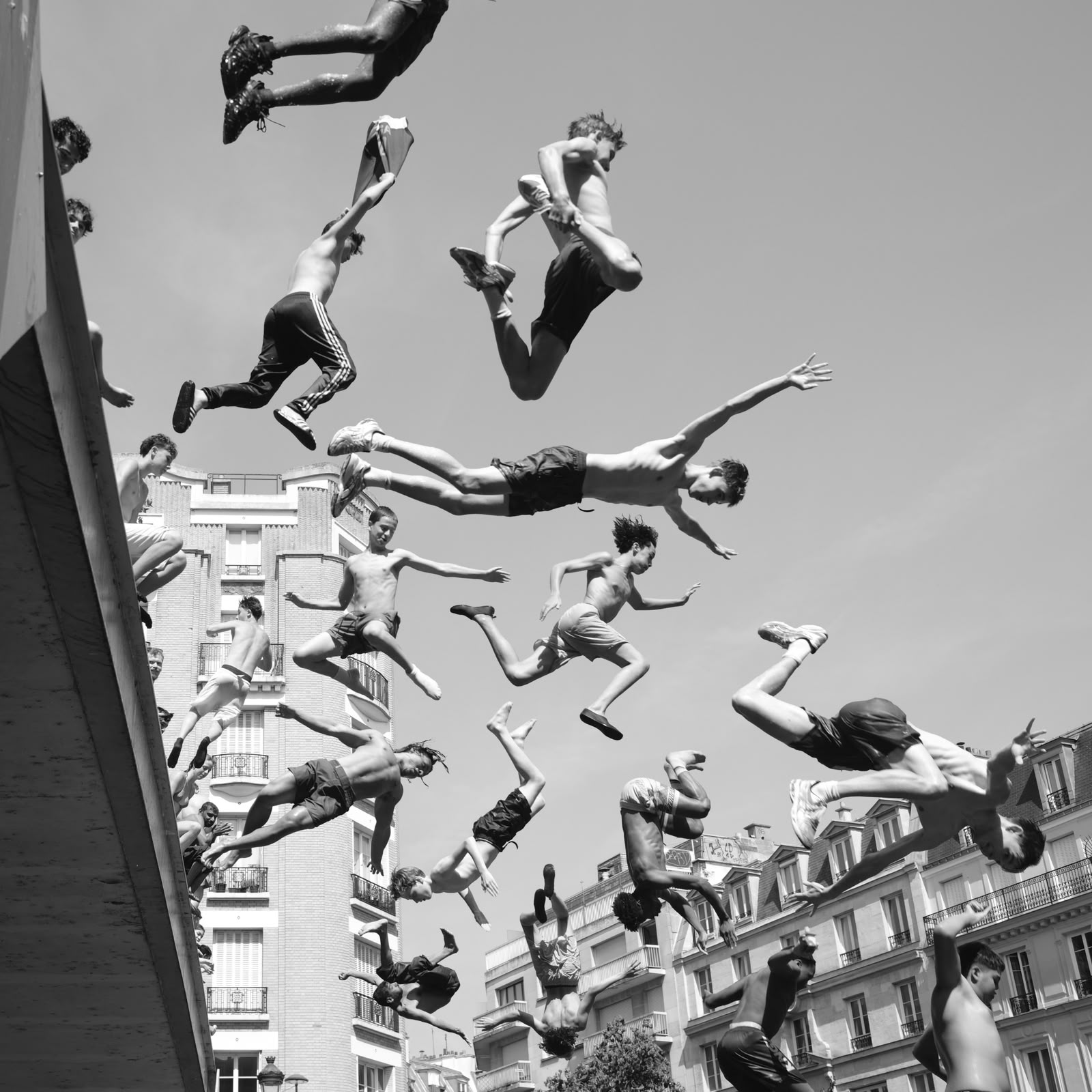
Andrii Bulavka is a young Ukrainian artist living in France. Emigration is a core part of his life story, and the street is his starting point. The urgency to capture the true meaning of things drives his visual language. The recent heatwave that swept across Europe this summer of 2026 allowed him to create one of his most celebrated shots. This piece belongs to a series of post-processed images created from hundreds of photographic sequences, as he shared with Youth Magazine. He also revealed his artistic touchstones: three incredibly powerful names in the world of art.
Andrii, what is a Ukrainian doing in France?
I was born and raised in Ukraine, but living and working in France, Paris, for the last 13 years. I came to France to get closer to the origins of Parkour - a huge passion of my younger years. But since Covid I've progressively switched my attention to photography and become really obsessed with it.
What did your photographic research start from?
I've started with street photography. Since I bought my first semi-professional camera, I've become inseparable from it, shooting a lot of street scenes, which are still a big source of inspiration in my work. When I became a member of MYPH (The school of conceptual and art photography in Ukraine), I started to develop a completely new dimension for myself, that of conceptual photography. This meant I shifted my focus from the visual aspect of pictures towards their meaning. I started to work on pictures that were not necessarily beautiful, eye catching, or documentary. I wanted my work to speak to other people about the emotions or experiences that are close to me, like emigration, longing for connection, or the meaning of the things surrounding us. My biggest inspirations in this area were Japanese photographers.
There is only B&W on your Instagram profile: why this choice?
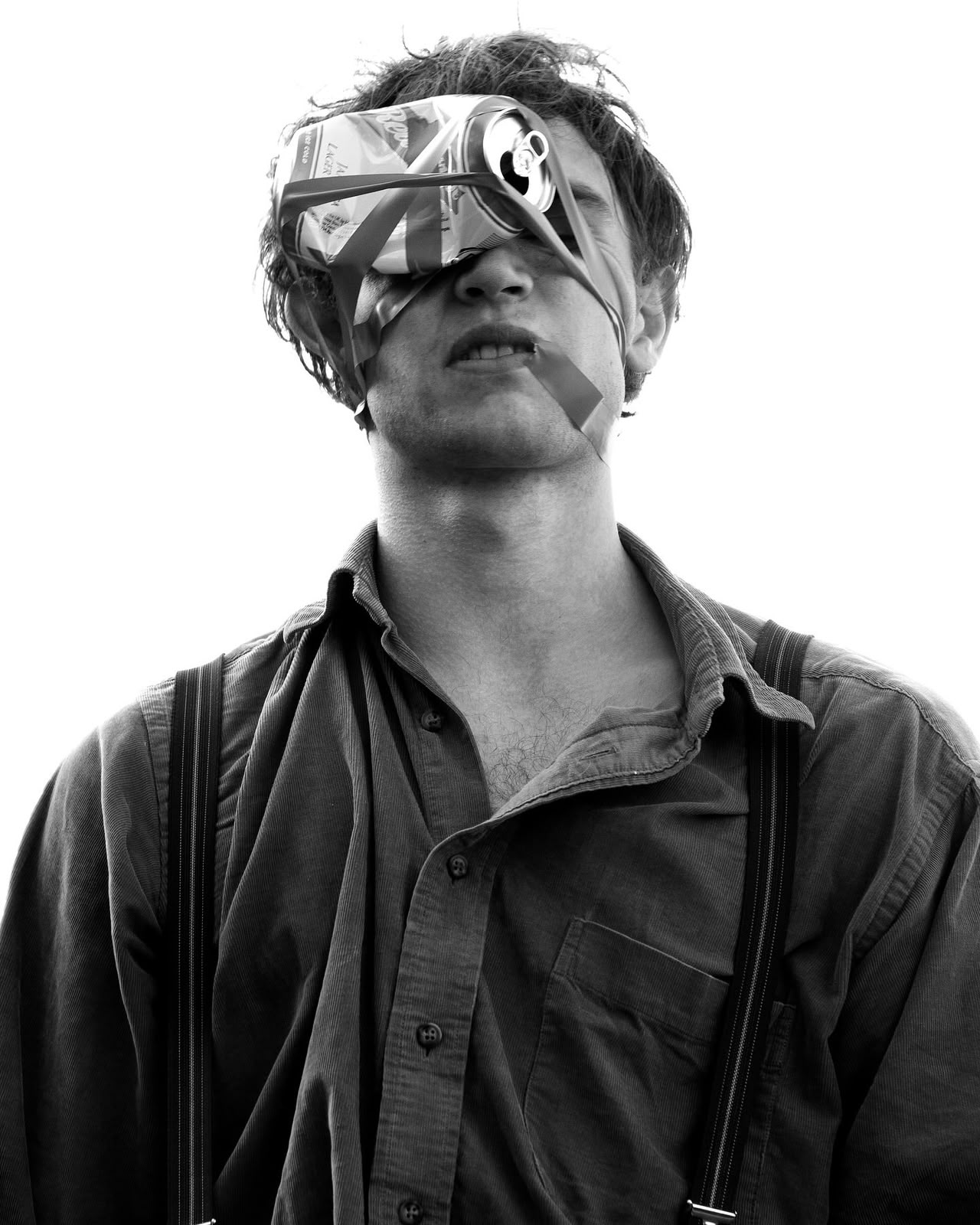
It's true that most of my work is in black and white. Color is a huge additional dimension to any picture. Color can tell stories for itself. I can still use it in some projects if it's important for the concept. But mostly I subtract it from my work to leave minimum distractions for myself and for my viewers, so they can better concentrate on the idea enveloped in my work.
Could you tell us about Parisians: When was it taken? Where was the concept born? How did you create the final picture, and what does it represent for you?
There was a number of heat waves recently in Paris, and for the first time in a long time it was allowed to bathe in the canals. Parisian youth understood it literally, and local rivers and canals became real seashores full of people for the whole summer. The bravest were jumping in the water from the bridges. As a photographer and a parkour athlete it was impossible for me to ignore that. I spent about 2 days straight taking thousands of pictures of them.
I had so many beautiful pictures, but still it didn't feel like an interesting work to me. Dozens of other photographers were doing exactly the same right beside me. Each of the shots was telling a small story, but I wished to catch this whole energy of the young rebellion against the heat, against the rules, in only one shot or a small series.
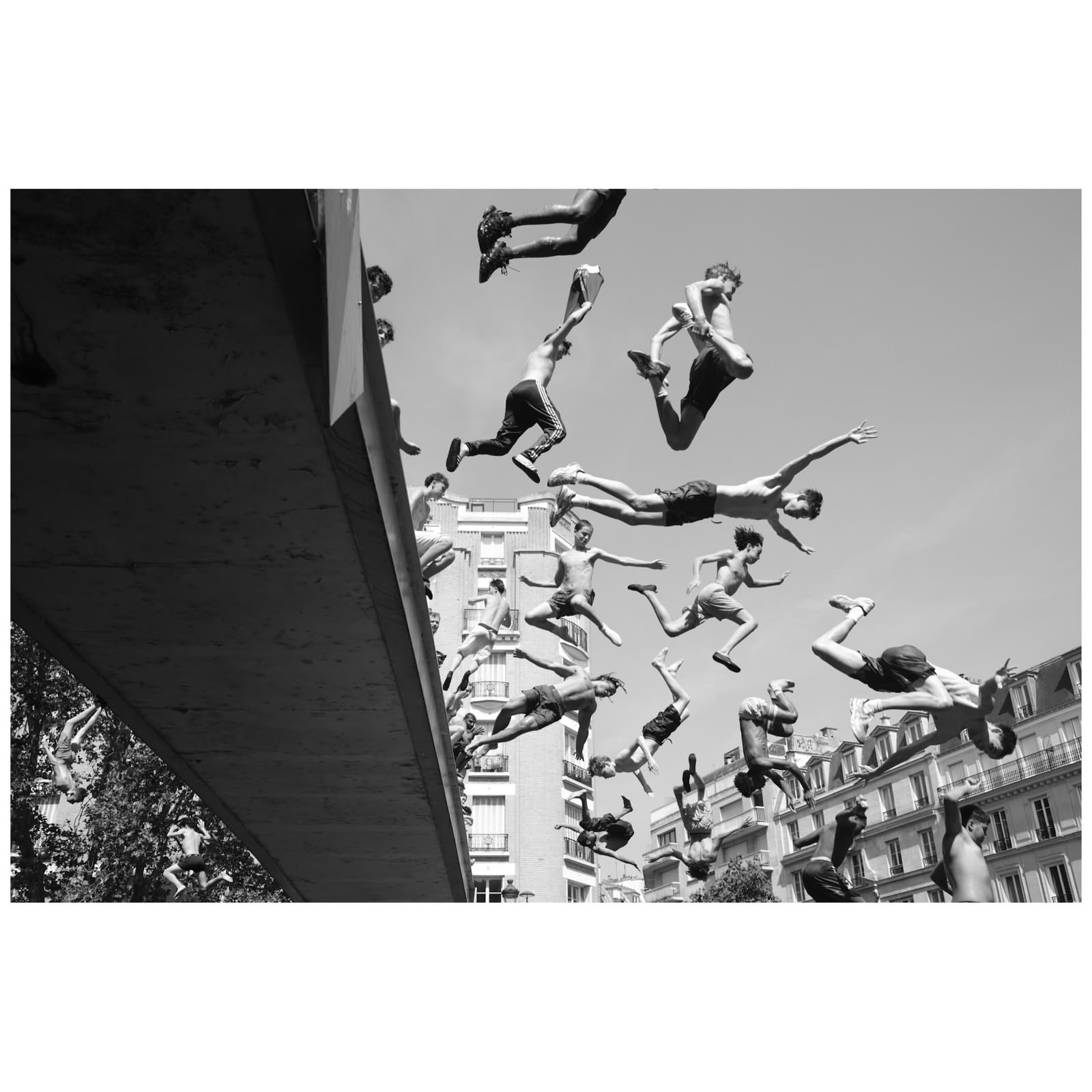
So I decided to use a collage. Out of all the pictures taken those days I chose several and put them all in one scene. When I broke this unspoken rule of street photography, I felt that it was exactly what was missing in the puzzle. It was my little act of rebellion, and I'm sure that some people will not be happy about it.
But as a result, I created something that reminded me of the work of Auguste Rodin. In his most important work, The Gates of Hell, you can see the same energy of dozens of people, jumping in the void, frozen in improbable shapes and forms. I found the resemblance quite striking, especially knowing that Rodin's models were the same Parisians, living in the same place, just one century earlier.
What do you think about European photography and graphic research? Do you follow anyone in particular?
Recently I've been much more interested in the arts that are not purely photographic, but could and do somehow use photography or video documentation. I would spotlight two artists that inspire me a lot in my work: Sophie Calle for her approach to making a work of art out of her own life and experiences, and Marina Abramović for her breathtaking performances exploring the human condition and the soul.
What is your next project?
For the past two years I've been working on a deeply personal and somehow provocative project. I had to travel the world, from Japan to Guatemala and Europe. In each country I had to meet the people I once loved. And when I did, I asked them all one simple thing: they had to stage and make a portrait of me and tell with it whatever they wanted to. Good or bad. They could use whatever crazy ideas, and I had to accept anything.
I can tell you that this project was truly transformative for my personality and my art. I'm currently looking for a publisher to work on a photo book documenting this journey and hope to share this work with the public this year.
MARINEVE CANTARELLA
Photography
Andrii Bulavka