"The Ballad of Eternal Youth" brings two black-and-white archives into conversation, both shot on 35mm film. Spanning 45 years and what was once the Iron Curtain, the project unfolds as a silent dialogue between a father and his daughter.
Gábor Martin, born in 1953, spent the 1970s working as a domestic political photojournalist in Békéscsaba, southeastern Hungary. Off the clock, he turned his lens to his friends, couples, and late-night gatherings. His daughter, Wanda, born in 1991, moved to London in her early twenties to study at the London College of Fashion, spending the 2010s immersed in East London’s nightlife. When she began shooting, she had no idea her father had documented similar scenes decades earlier; the striking parallels only surfaced later, when Gábor rediscovered negatives that had remained hidden for decades.
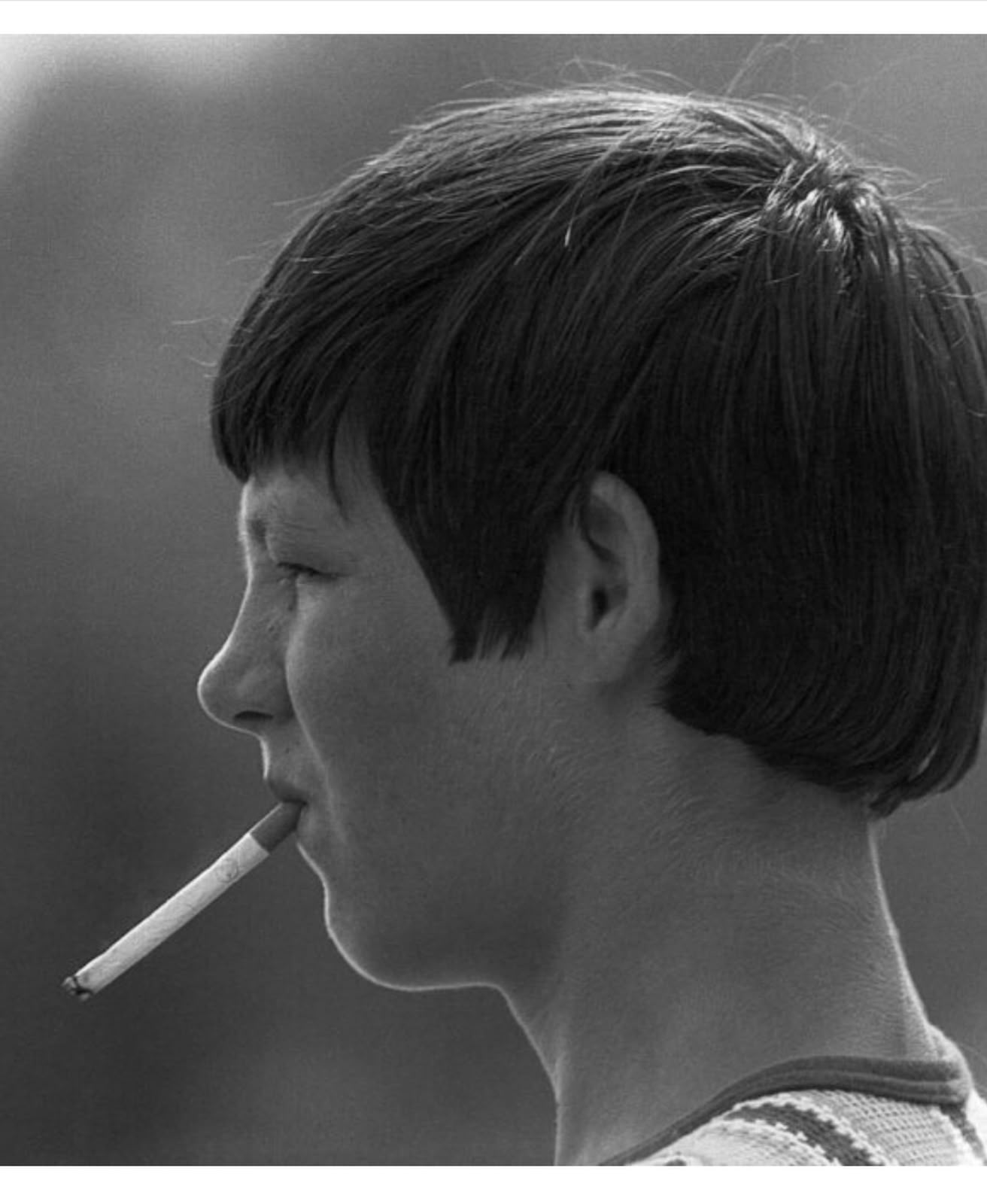
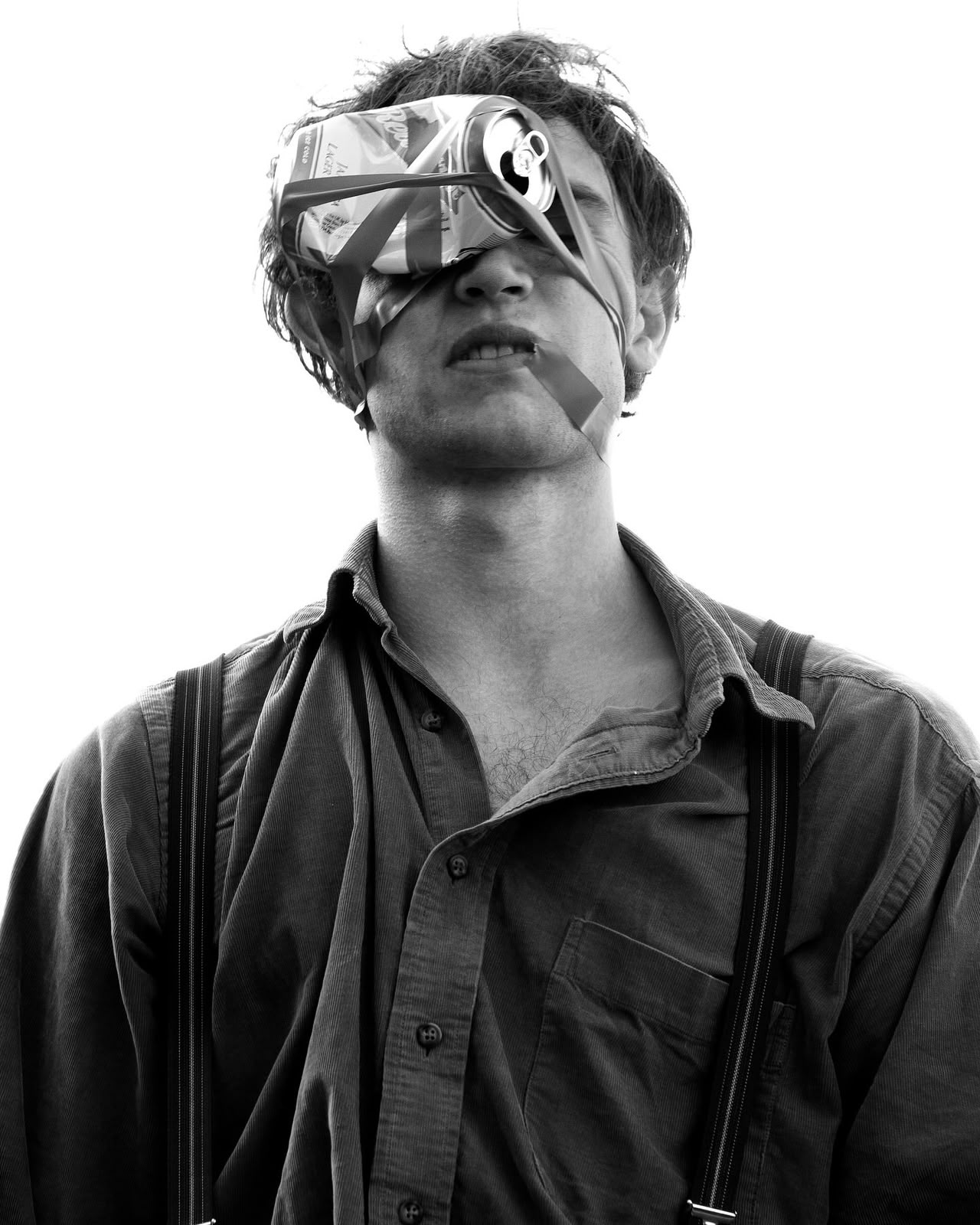
Exhibited in 2024 at the Mai Manó Ház in Budapest—curated by Péter Baki—the project has now been published as a photobook, The Ballad of Eternal Youth. Behind several of the frames lie stories worth telling: a young boy in profile, barely twelve or thirteen, with a cigarette dangling from the corner of his mouth; a punk frontman with a beer can taped across his face.
Lenin Behind the Decks
Békéscsaba, 1979. Géza Andrékó—a friend of Gábor’s and the resident DJ at the local workers' club, known simply as Melós—flips through a notebook in headphones, surrounded by reel-to-reel tape recorders. Behind him hangs a towering portrait of Vladimir Lenin. "At the time, it was completely normal," Gábor recalls. Looking back at the shot today, he adds: "You have the omnipresent gaze of the regime in the background, yet at the center of the image is a DJ providing the soundtrack for a generation searching for moments of freedom, escape, and connection within the boundaries of daily life."
British and American records were virtually impossible to come by, arriving through friends and family returning from Yugoslavia alongside fashion magazines and, with any luck, a pair of genuine Levi’s or Lee jeans. Out of more than 400 students at Gábor’s high school, only three owned real American denim. Many songs reached Melós via Teenager Party, a Radio Free Europe show hosted by Géza Ekecs, which the official party newspaper Népszabadság had accused as early as 1967 of smuggling political propaganda between tracks. "We listened in secret under our blankets at night," Gábor remembers, recording tracks on cassette as he chased the shortwave signal.
Long hair and denim carried a heavy price. "People were often stopped or harassed by the police simply because of how they looked, dressed, or expressed themselves," the photographer says. "During the socialist era, these images could never have been published."
Inside the Mosh Pit
More than three decades later, his daughter frequented very different haunts. In 2015, at The Shacklewell Arms in East London, Wanda photographed a group of strangers slumped on a bench, clad in faux fur, sporting 1970s-style moustaches and long hair. Years later, they recognized themselves on Instagram and met up with her in person.
At gigs, Wanda never stayed on the sidelines. "I wasn't interested in observing from afar; I wanted to experience the music from the inside," she says, recalling nights spent in the middle of the mosh pit with her camera, dodging elbows and beer-soaked gear. In 2017, backstage at a festival in Margate, she photographed Dead Pretties, an up-and-coming punk trio that would split up later that same year. Lead singer Jacob Slater—now fronting Wunderhorse—began fooling around in front of the lens, ultimately taping a beer can to his face. For Wanda, that frame became the quintessential embodiment of youth rebellion: "Rejecting expectations, embracing chaos, and not taking yourself too seriously."
Rebellion When You Have It All
The subtitle Wanda gave the series in her head comes from a tattoo across the chest of Cashino, bassist for the London punk band Luxury Apartments: "All We Ever Wanted Was Everything"—a line from Bauhaus’s 1982 album The Sky’s Gone Out. Wanda photographed him in 2023, and the phrase has stayed with her ever since.
"People often ask me what young people are rebelling against today," she says. "In my father’s case, the answer seems obvious. But my generation? We grew up with far more freedom and opportunity." For many of her peers, she explains, rebellion meant rejecting a prescribed path: settling down early, getting married young, having children. Yet unlimited freedom brings its own anxieties: "Infinite possibilities can be just as overwhelming as limitations. Faced with so many choices, we often struggled just to make one."
The Boy on the Riverbank
The image of the boy with the cigarette, titled Smoking Boy, dates back to 1972. Gábor was testing a new telephoto lens and framed him from a distance as he fished along the water's edge. When Wanda suggested including the shot in the project, he was skeptical; photojournalism school had taught him that a great image reveals the extraordinary in the ordinary, or vice versa. To him, it seemed like nothing more than a simple portrait of a kid.
For his daughter, it is one of her favorite photographs in the entire collection—a moment suspended "precisely on the threshold between childhood and adulthood." Fifty years later, her father has come around: "The world changes, and suddenly a photograph becomes a record of something that no longer exists."
The caption lists no name for the boy. Only his profile remains, as the ash on his cigarette burns slowly downward.