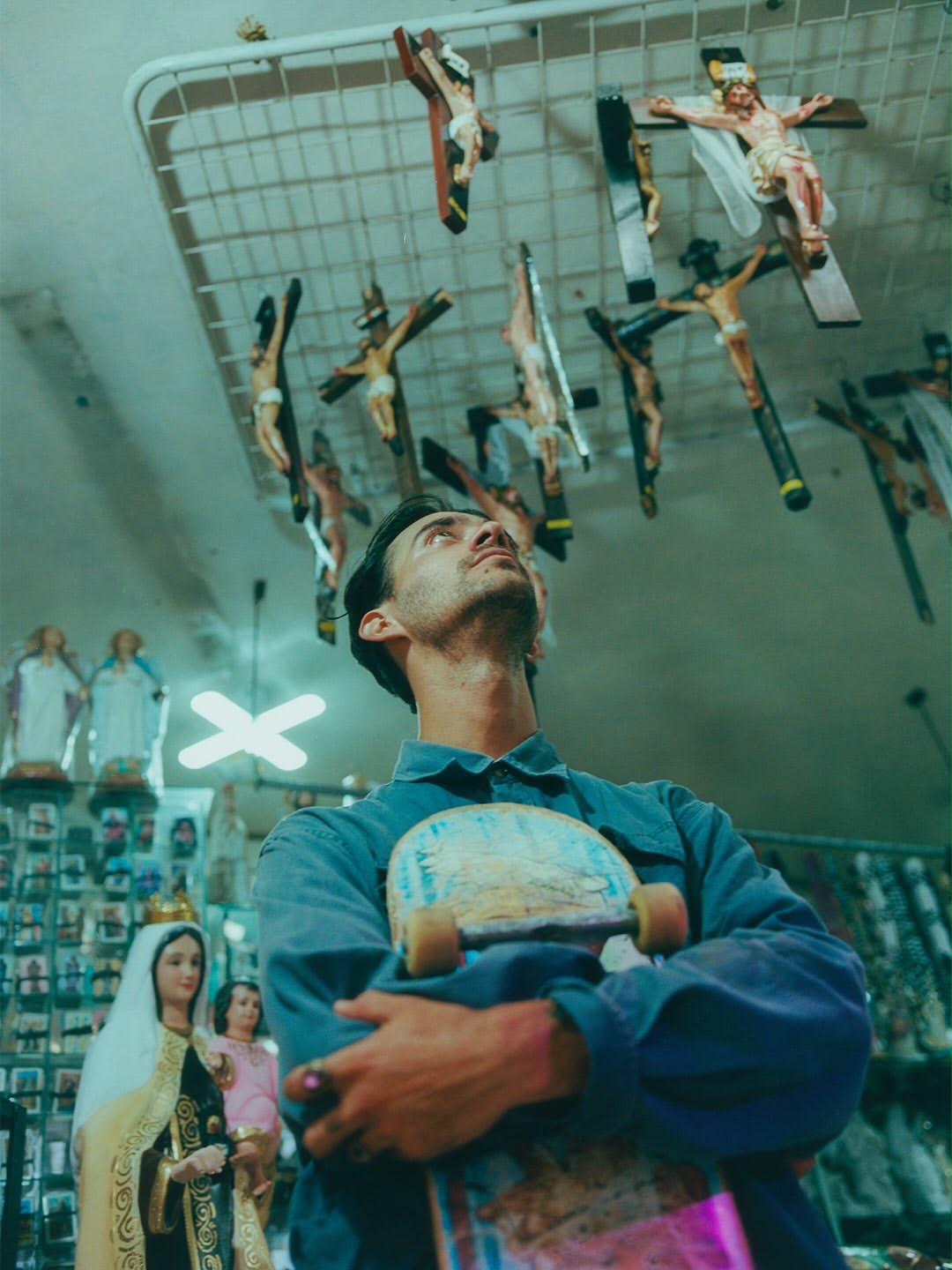
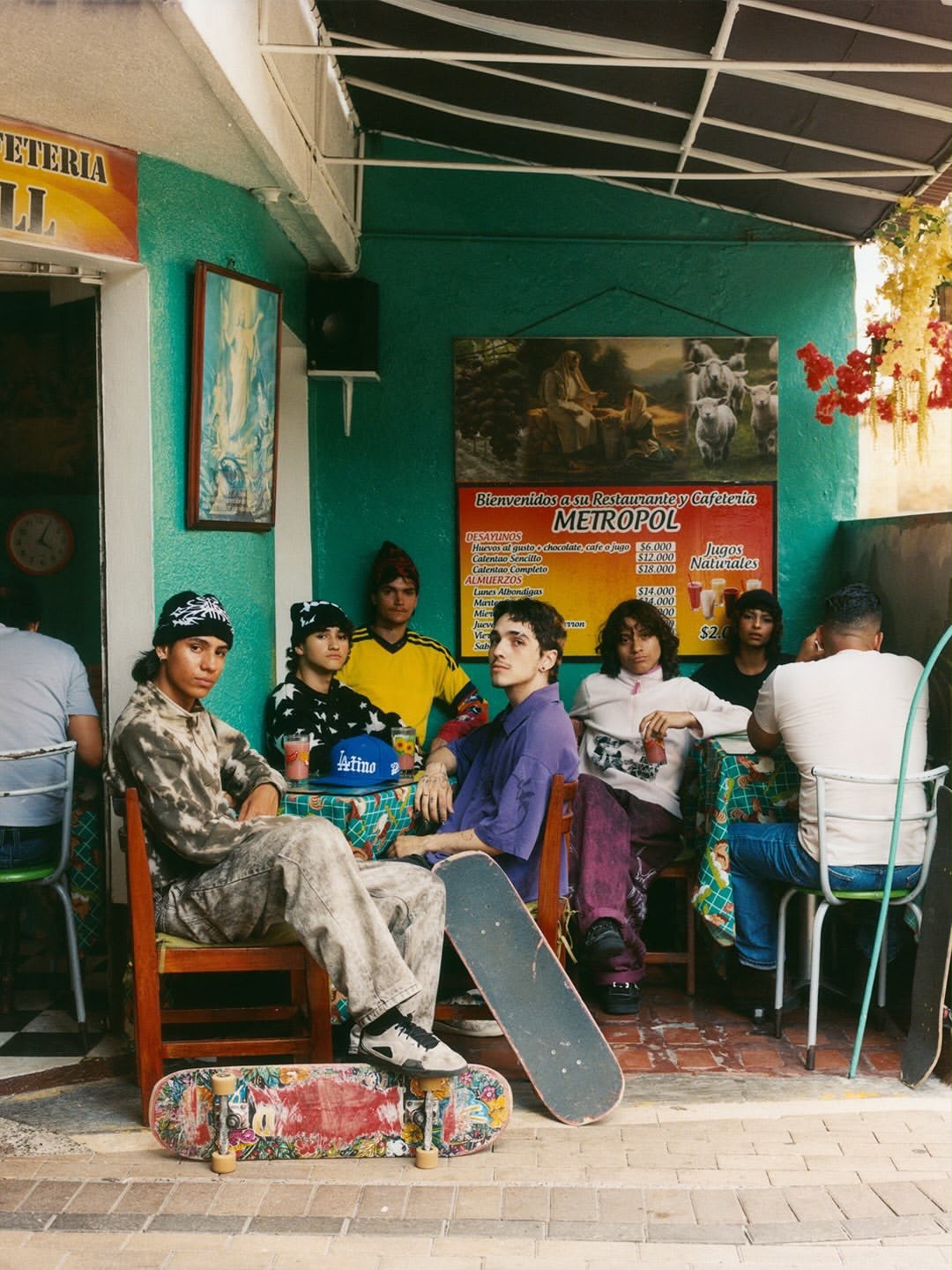
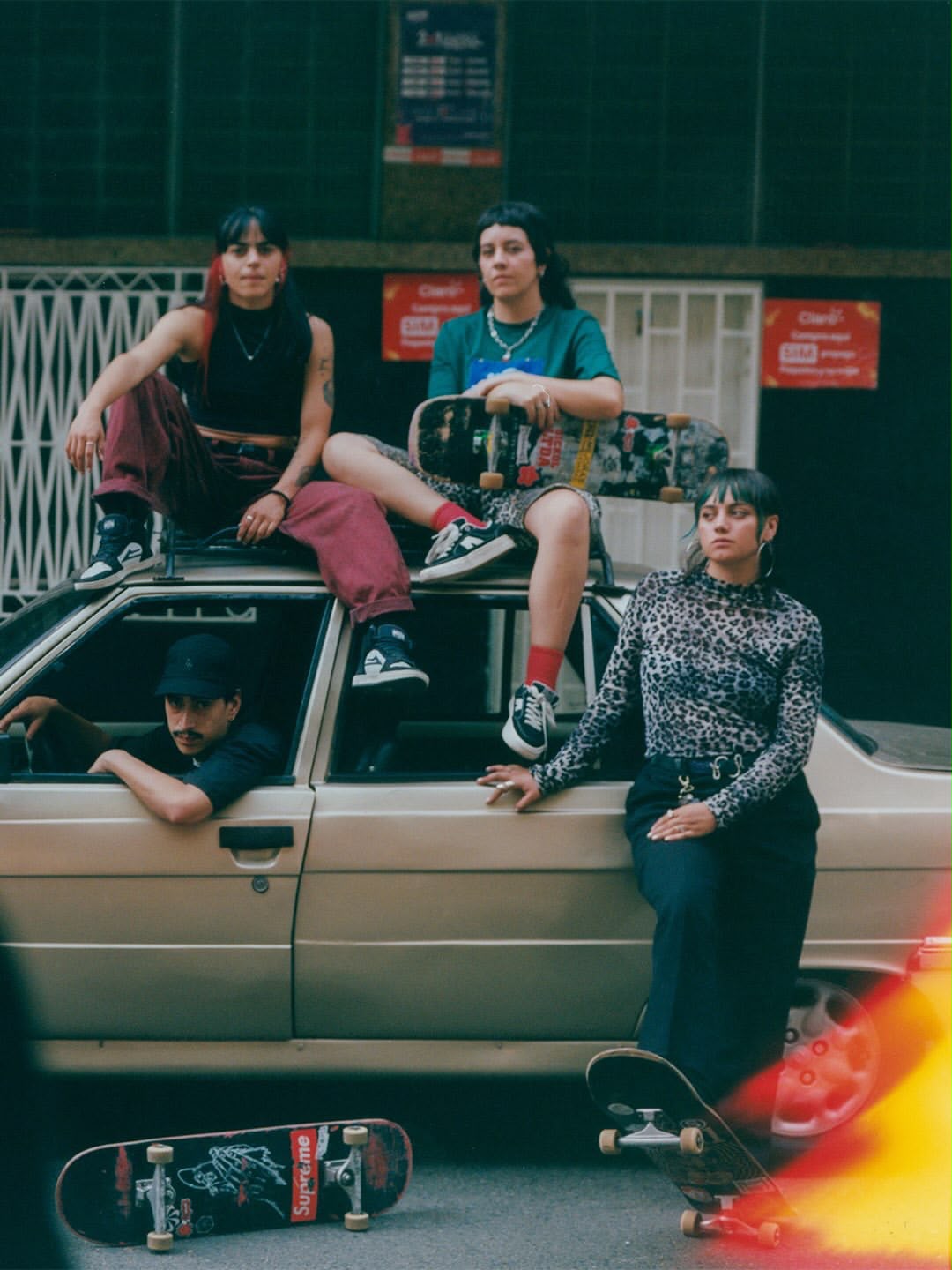
Touching Ground* stems from the meeting between Canadian-British photographer and filmmaker Lauren Luxenberg and skater and creative director Ronal Sanmartin, known across the scene as WTF Ronnie. The setting is Medellín, the Colombian city that, decades after the violence that once bloodied its streets, has transformed into a vibrant hub of youth culture. At its core lies a community: skateboarding used as a lens through which to read an entire city. *Touching Ground* unfolds as an interconnected project spanning photography, a photobook, and a film.
**The Sound of Urethane on Concrete**
Ronnie shares an origin story that borders on myth. He was thirteen years old, at home in Medellín, when he heard the unmistakable clatter of polyurethane wheels hitting concrete. His mother mentioned a couple of "crazy guys" skating in the backyard behind their house. One of them handed him his board and promised to return the following week to teach him how to ollie. Everything started there. Yet for Sanmartin, skateboarding was never just about community—it was a lifeline. His neighborhood was among Medellín's most perilous throughout the 1980s and 1990s, enduring nearly fifteen years of raw violence. "Skateboarding helped me discover another world, to build a life for myself."
**The Snowball Effect of a Single Shoot**
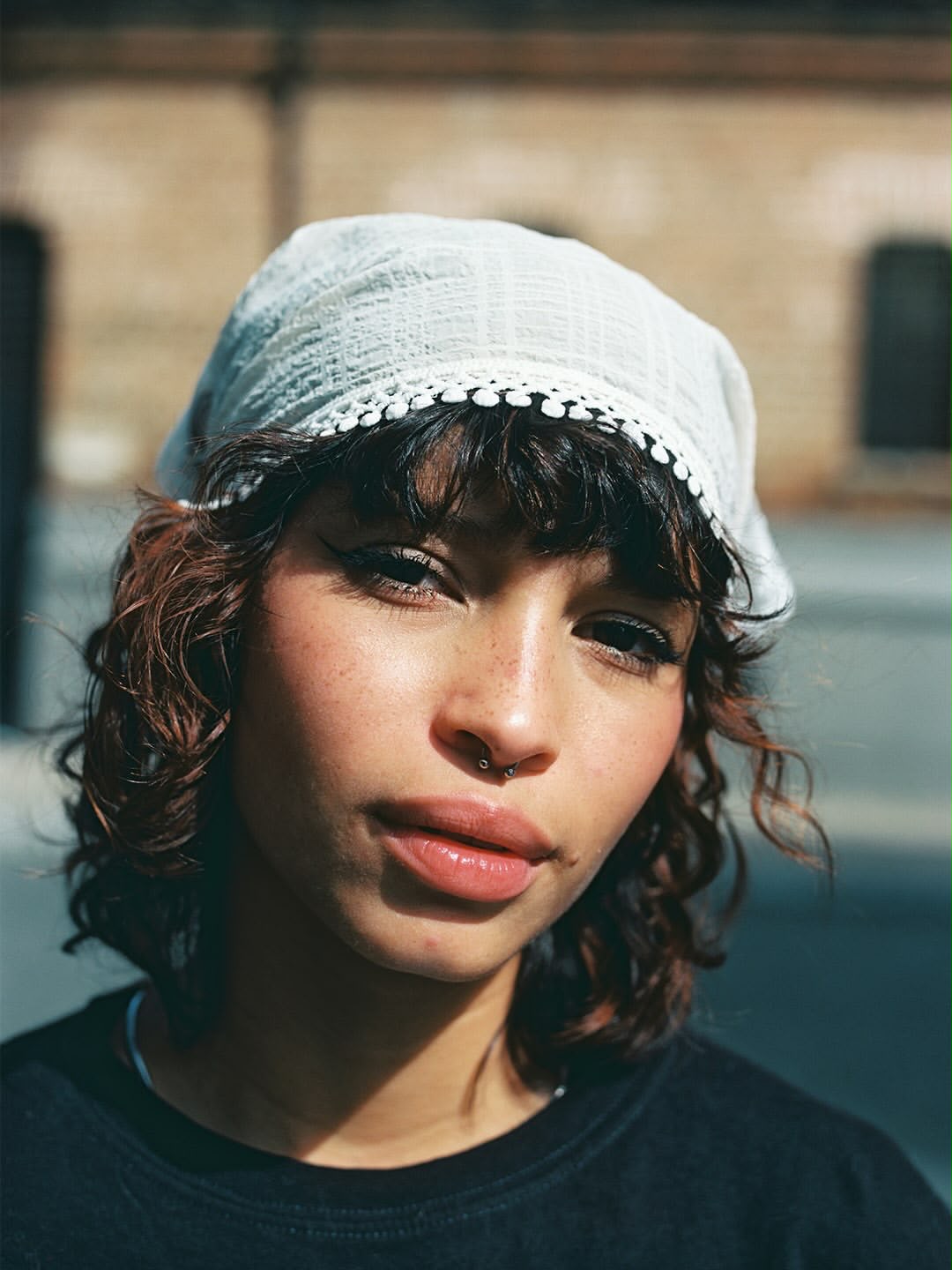
This dual nature—escape and belonging—serves as the project's anchor. Luxenberg arrived in Colombia almost by chance during a solo journey across the Chilean and Argentine Andes, persuaded by a friend to make a stop in Medellín. She began by photographing people in the streets: their style, their presence, their aura. Crossing paths with Ronnie triggered a snowball effect. What was conceived as a single photoshoot expanded rapidly: Ronnie called his skater friends, who invited others, and soon they were traversing all of Medellín to photograph anyone who wanted to be part of it.
**Subverting the Solitary Hero**
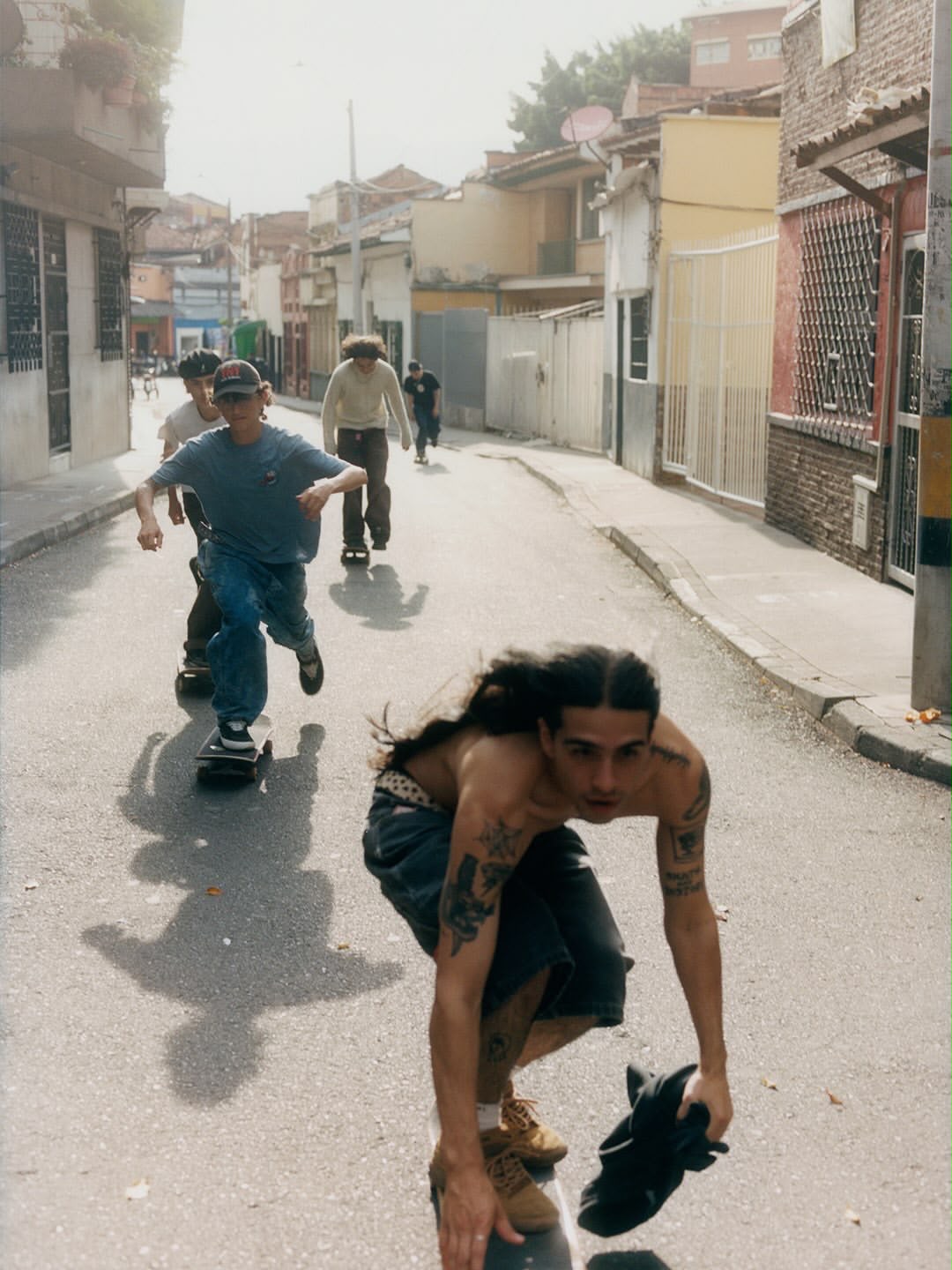
The streets of Medellín; the milky morning light flattening the low, vibrant houses of the *barrio*. A young man speeds into the foreground—long hair, bare chest, tattoos. Behind him, a line of fellow skaters follows, casting long shadows across the asphalt. This is no solitary hero, but a collective of friends.
The result subverts traditional skate iconography. In classic skate photography, the rider is almost always framed alone—suspended in mid-air, isolated against the sky, the romantic hero of an individual feat. Here, the reverse occurs. Rather than capturing isolated skaters pulling off tricks, the project highlights friendship, community, vulnerability, and collective strength. It is not about the individual executing a stunt, but about bodies moving together.
**Flowers in the Cracks**
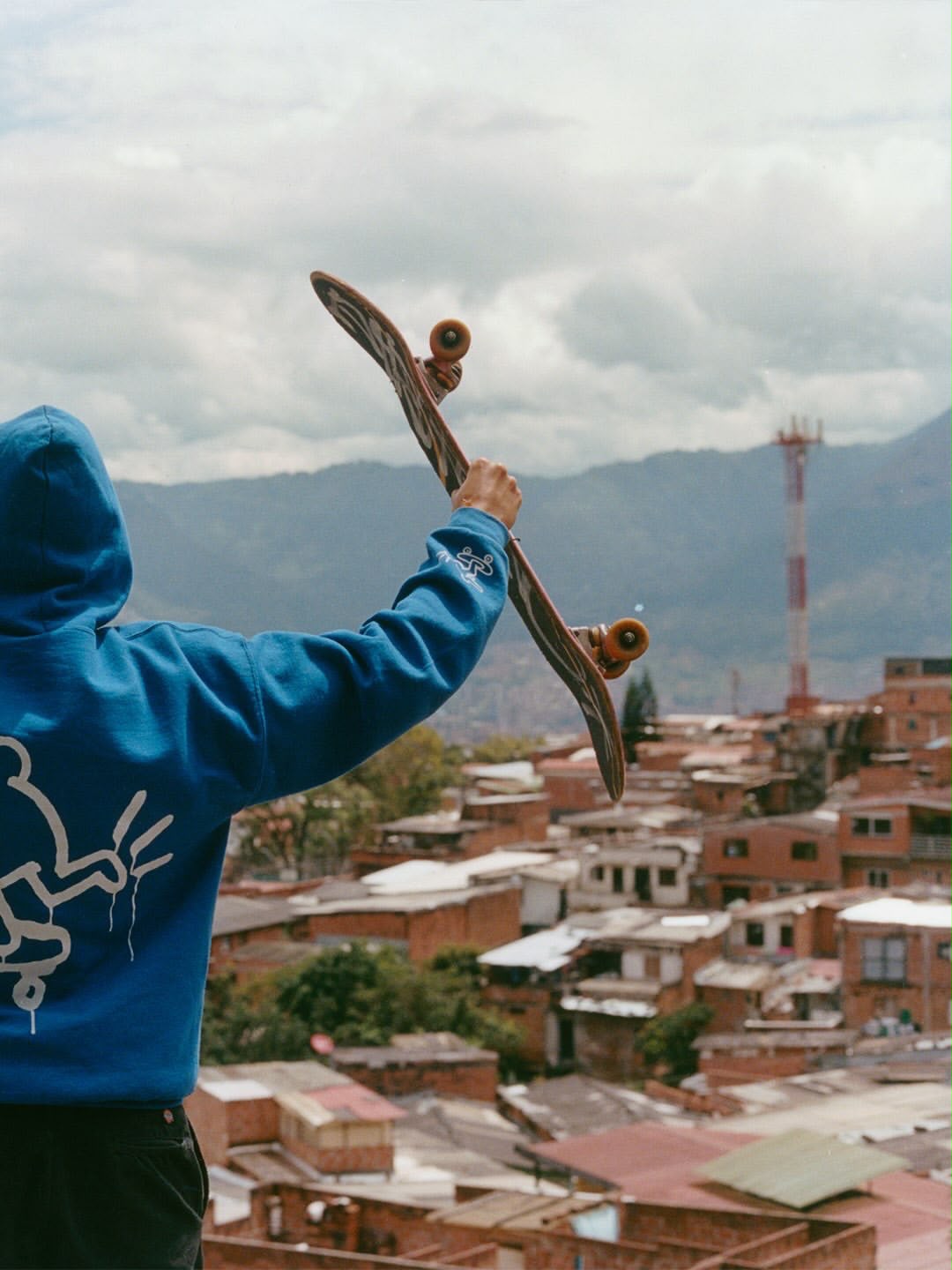
Geographic grounding plays a vital role. Luxenberg follows the skaters from their homes to the spots they haunt across the city, weaving their movements together with images of Medellín's urban and natural landscape—from wildflowers sprouting through cracks in the pavement to the mountains encompassing the valley. The detail of a flower pushing through concrete is far from decorative; it is the thesis of the project itself. It echoes Ronnie's belief that in Medellín, life takes root and grows even on concrete, where it is least expected.
**Beyond the Mood Board Aesthetic**
For a generation raised on endless feeds of skate-core and pre-packaged urban nostalgia, this work delivers a raw message: skateboarding is not an aesthetic to be saved to a mood board. It has always surpassed its definition as a sport, operating as an anarchic practice, a lived attitude, and a complex social and visual code. It represents how a community reclaims spaces once denied to them—parking lots, church plazas, courtyards, steep *barrio* descents—and transforms them into home.
**From the Barrio to the Gallery**
The project has extended well beyond the boundaries of the local scene. Exhibited at Shanghai's Fotografiska as part of the group show *Skate of the Art*, it has also drawn the gaze of global brands. From a kid's escape route in a tough neighborhood to an artifact in an international gallery, it follows the familiar arc by which marginal subcultures are eventually brought into the mainstream fold.
Yet *Touching Ground* attempts to resist total commercialization. It avoids photographing skateboarding merely as a style, framing it instead as a bond. And unlike an aesthetic, a human bond cannot be sampled or copied. The concrete remains hard, the descent remains dangerous. What changes is who is riding down it alongside you.
PHOTO: Lauren Luxenberg, Touching Ground
Photography
Lauren Luxenberg, Touching Ground