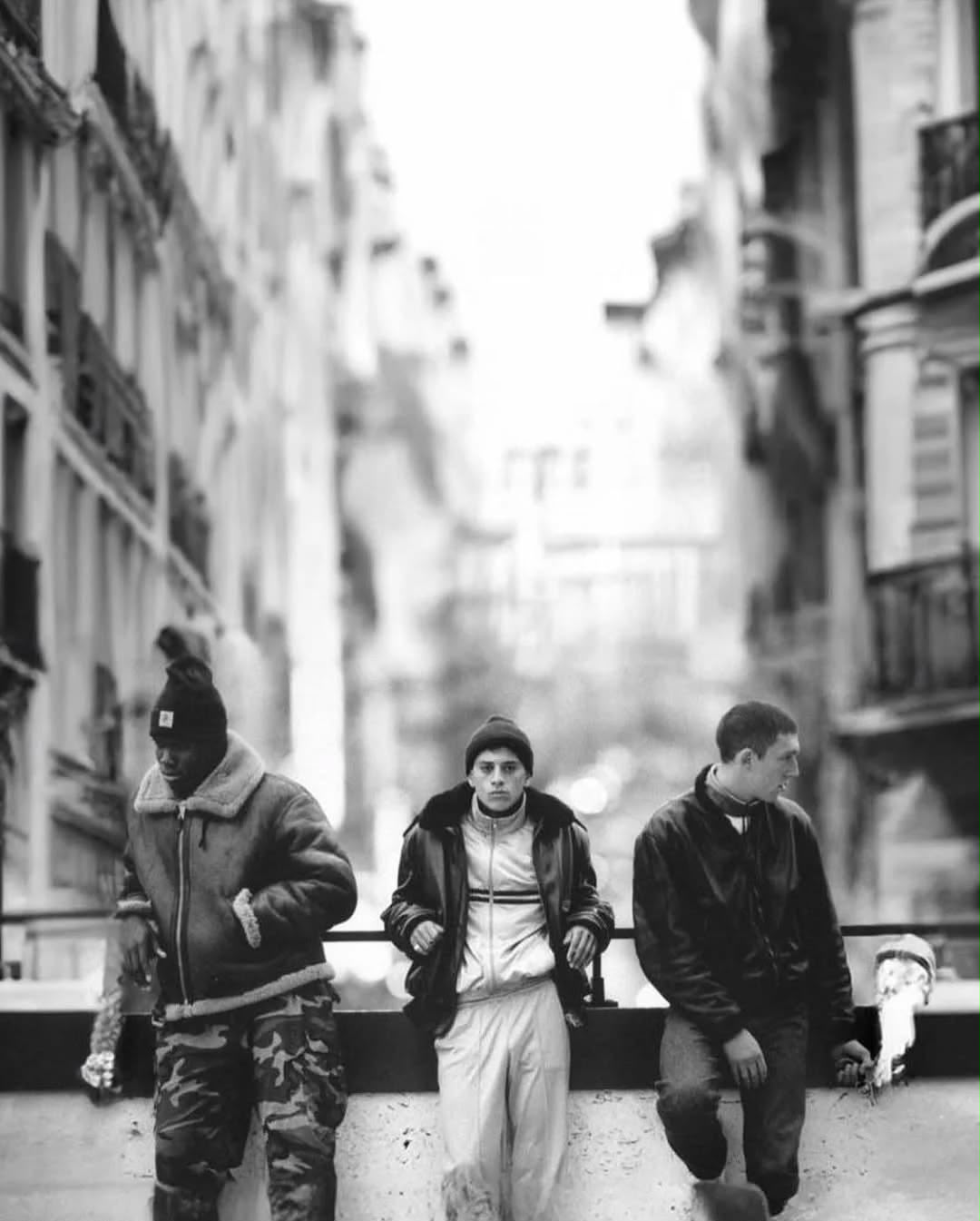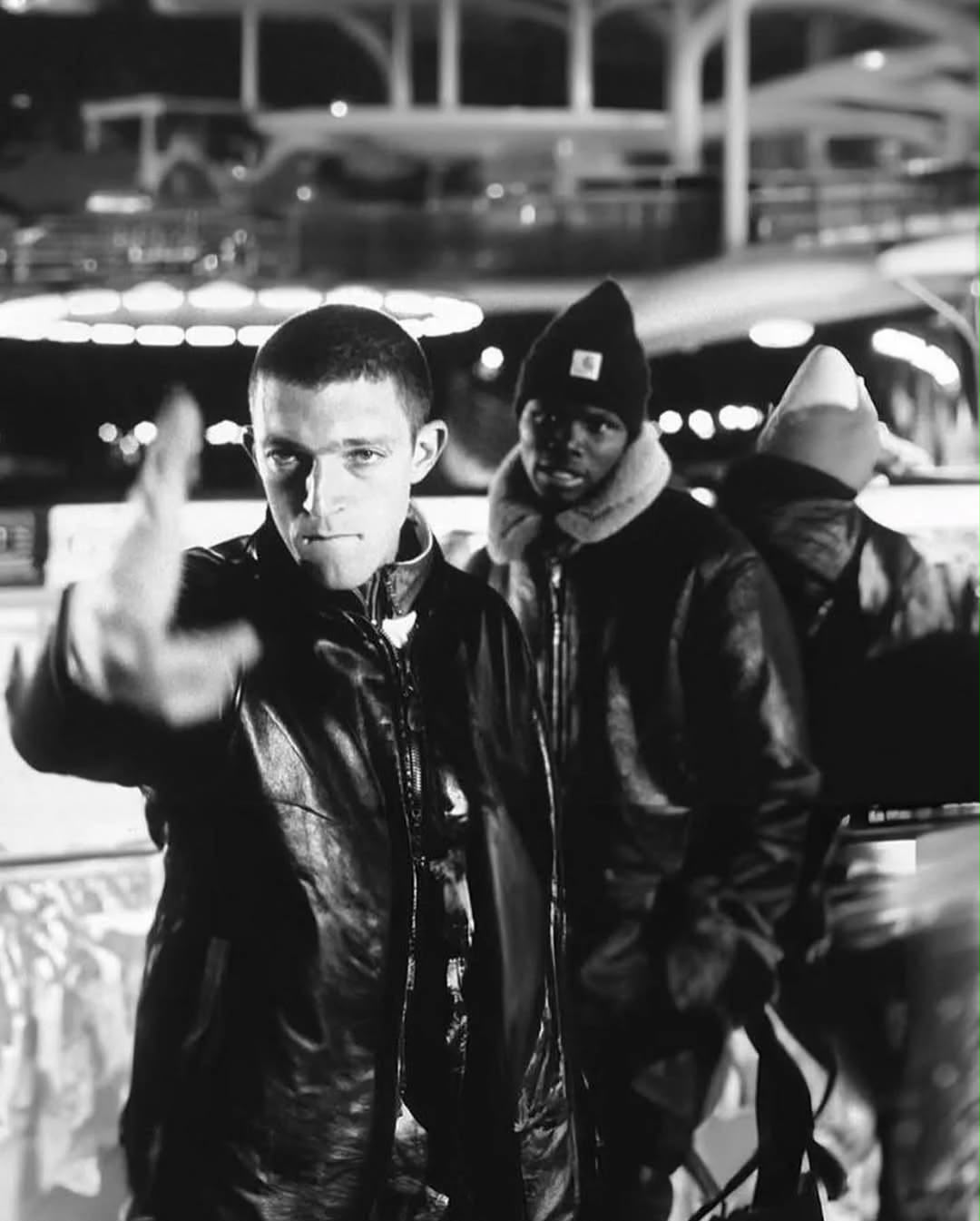
A billboard at night. At its center, Earth photographed from space, underneath the tagline "Le monde est à vous"—The world is yours. Someone has corrected a single letter by hand, turning it into "à nous." Ours, not yours. It is one of the most widely shared frames from La Haine (Hate), Mathieu Kassovitz’s 1995 film. Thirty years later, it circulates through social media feeds like a poster, often detached from the story that birthed it.
A Police Station in the 18th Arrondissement
On April 6, 1993, 17-year-old Makomé M'Bowolé was detained and taken to the Grandes-Carrières police station in Paris’s 18th arrondissement. During interrogation, Inspector Pascal Compain shot him in the head at point-blank range. The defense argued the shot went off by accident. In 1996, the officer was sentenced to eight years in prison for voluntary violence leading to unintentional manslaughter. The teenager’s death sparked three days of riots, looting, and torched cars.
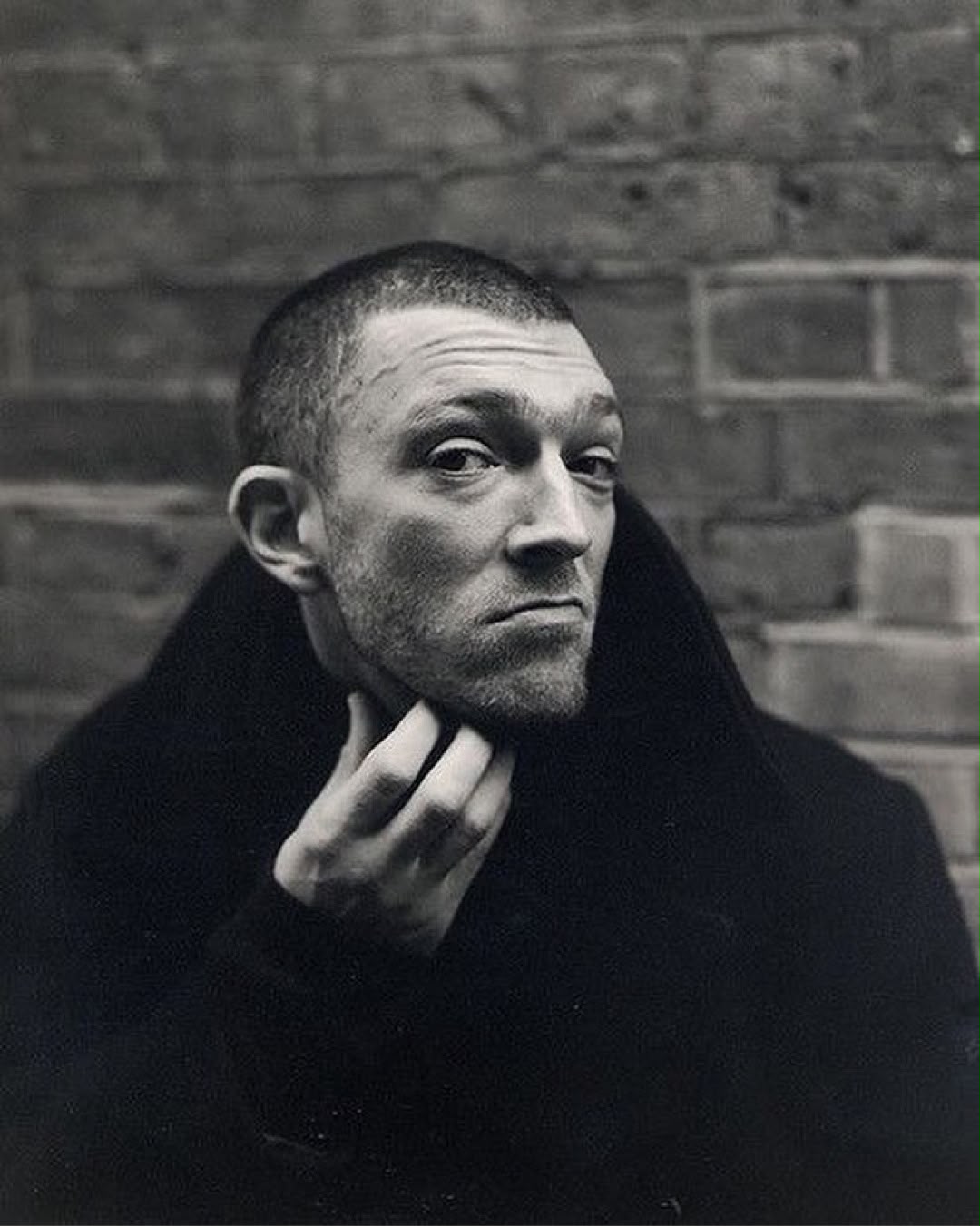
Kassovitz extracted the raw material for his second feature film from those turbulent days. La Haine chronicles the 24 hours following a riot in the banlieues through the eyes of three friends: Vinz (Vincent Cassel), Hubert (Hubert Koundé), and Saïd (Saïd Taghmaoui). Abdel, a youth from their neighborhood, lies in a coma after being brutally beaten by police. Vinz has found a gun lost by an officer during the clashes and vows that if Abdel dies, he will use it.
The crew filmed in the Cité de la Noé in Chanteloup-les-Vignes, the only municipality willing to host the set after a year of searching. The film was shot in color—a requirement of co-producer Canal+—but hit theaters in black-and-white. At Cannes in 1995, Kassovitz won the Best Director award. At the Césars, the film picked up three trophies, including Best Film.
"So Far, So Good"
The film's core resides in a parable Hubert repeats twice. A man falls from a fifty-story building and, on his way down, reassures himself at every floor: so far, so good. Because the fall doesn't matter; it's the landing. It is a story about a society that mistakes apparent stability for endurance, delivered through three youths who have zero control over where they will land.
Even the marker-corrected billboard has a precise genealogy. "The World Is Yours" is the slogan Tony Montana sees glowing in the Miami sky in Scarface. In La Haine, the promise of consumerism is transformed into a collective claim, scribbled by hand on a suburban wall.
Nanterre, Thirty Years Later
On June 27, 2023, in Nanterre, 17-year-old Nahel Merzouk was shot and killed by a police officer during a traffic stop. Days of nationwide riots followed. Makomé and Nahel were the same age, separated by three decades.
In October 2024, Kassovitz brought La Haine to the stage at La Seine Musicale in Paris as a hip-hop musical co-directed with theater director Serge Denoncourt. He explicitly dedicated the production to Nahel and all victims of similar police violence.
The Italian Reflection
In Italy, the film was released under the title L'Odio and became a touchstone for a generation raised far from the banlieues, yet close to the realities of urban peripheries. In 2010, Italian rapper Marracash titled his second album Fino a qui tutto bene, an explicit nod to the film. Since then, the phrase has entered Italian hip-hop lexicon as a shorthand for the precarious balance of growing up on the margins.
The connection extends to style. Among the tracksuits worn in the film are pieces from Italian sportswear brands like Sergio Tacchini and Fila. These are the same garments contemporary streetwear has reclaimed as markers of neighborhood identity.
From Makomé to Ramy
The film’s most unsettling parallel with current events, however, comes from the news. On November 24, 2024, in Milan, 19-year-old Ramy Elgaml died in a crash at an intersection. He was a passenger on a scooter driven by his friend Fares Bouzidi, pursued for roughly eight kilometers at high speed by a Carabinieri police vehicle. In the nights that followed, Corvetto—a working-class neighborhood in southeast Milan—saw torched trash bins, damaged buses, and clashes with law enforcement. Graffiti reading "Truth for Ramy" appeared across local walls.
The mechanics differ from those of Makomé or Nahel: no gunfire, but a fatal crash during a high-speed chase whose legal responsibility remains under investigation. The Milan Prosecutor's Office charged the Carabinieri driver and Bouzidi with vehicular homicide, while charging six other officers with offenses ranging from cover-ups to forgery. The preliminary hearing was adjourned to November 6. All suspects are presumed innocent.
An Image That Refuses to Stand Still
In 2020, to mark the film's 25th anniversary, Reebok launched a collaboration centered on the title. Vinz and Saïd's tracksuits reappear constantly on mood boards, while Pierre Aïm's stark black-and-white cinematography lives on in the visual archives of street culture accounts. It is the fate of many images born out of protest: they become recognizable before they are understood.
Yet La Haine continues to operate on two levels. Some watch it for the faces, the tracksuits, and the framing. Others recognize it because off-screen, the scene keeps playing out—in Paris as in Milan. The film does not bridge that gap. It leaves it wide open, suspended like Hubert's fall on any given floor before the landing.